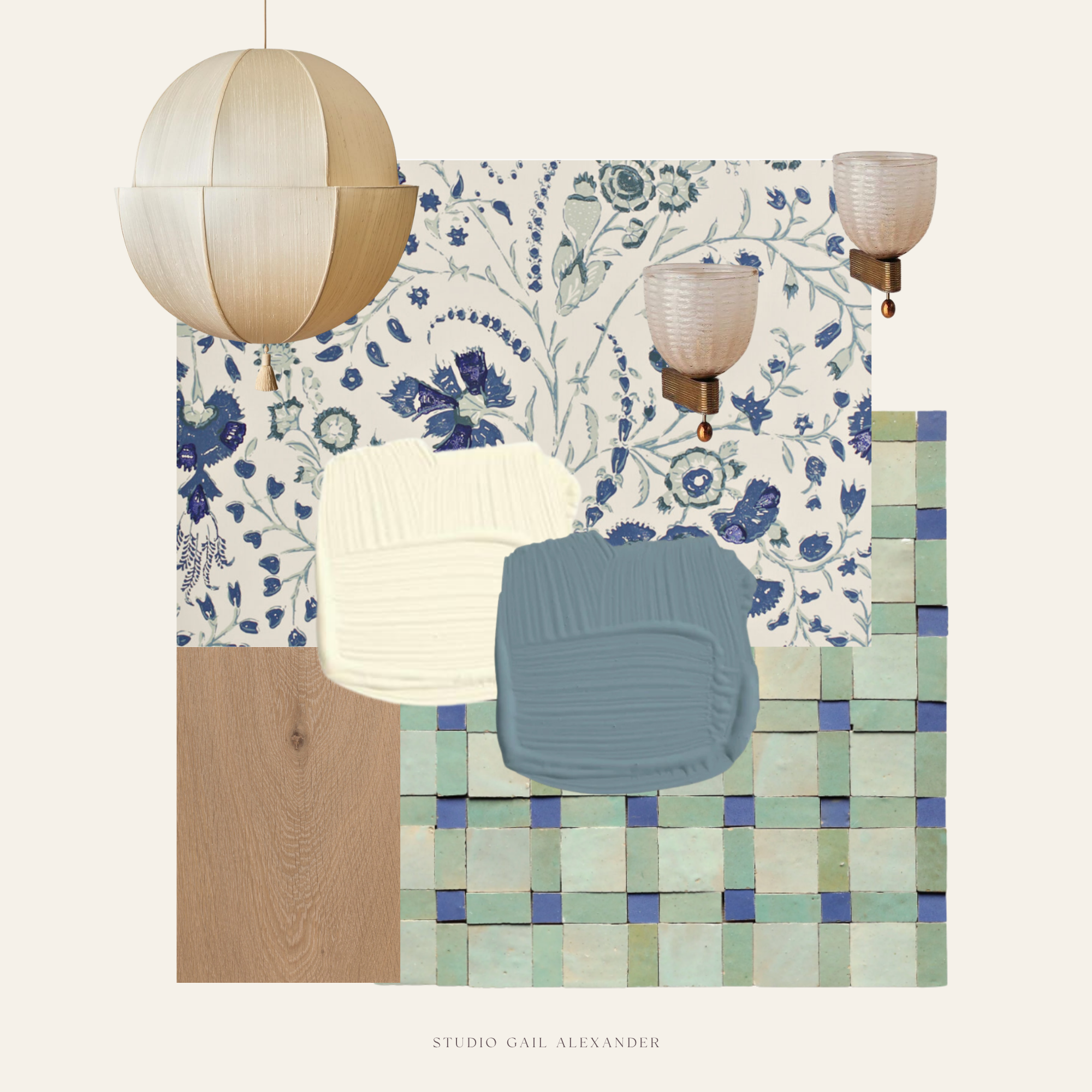
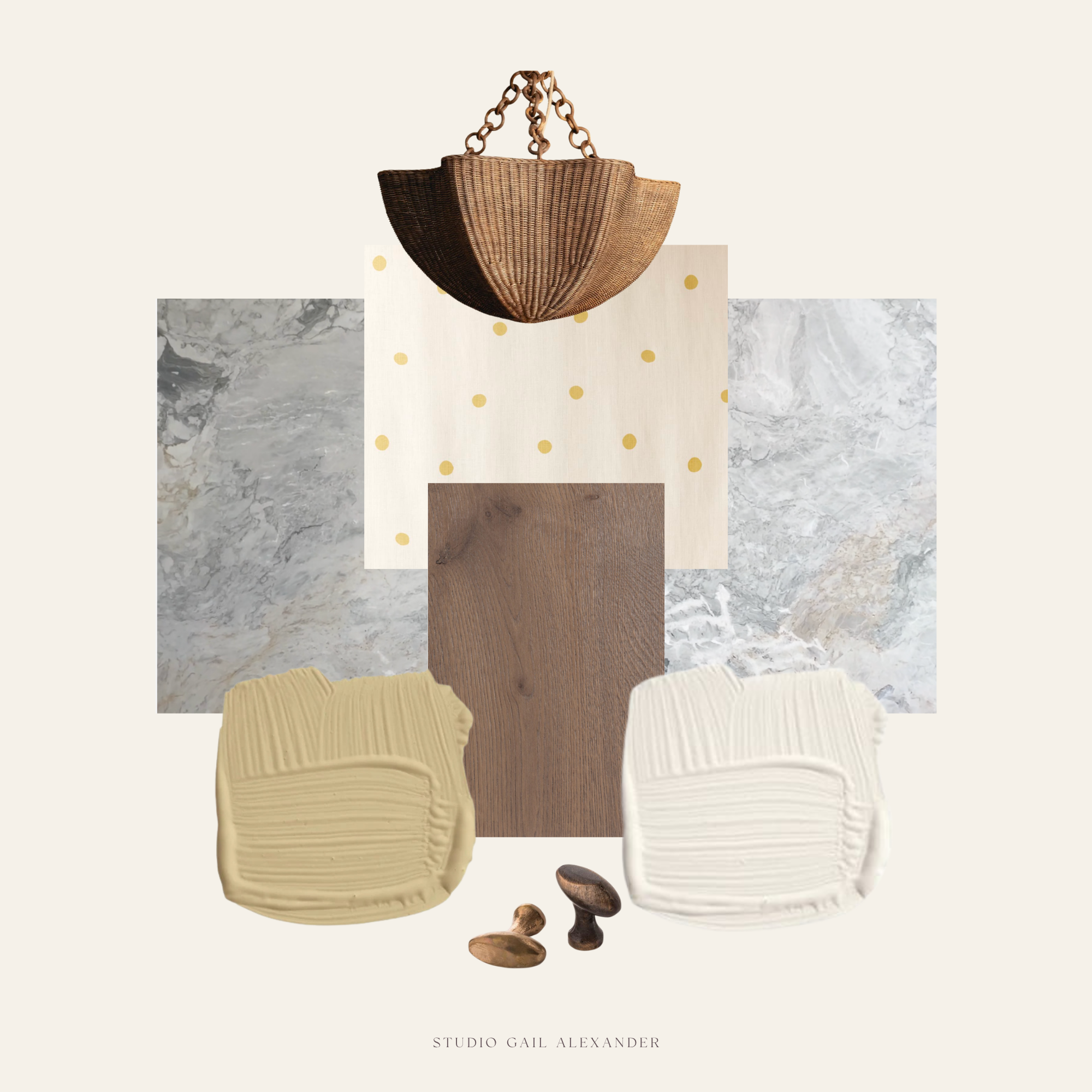
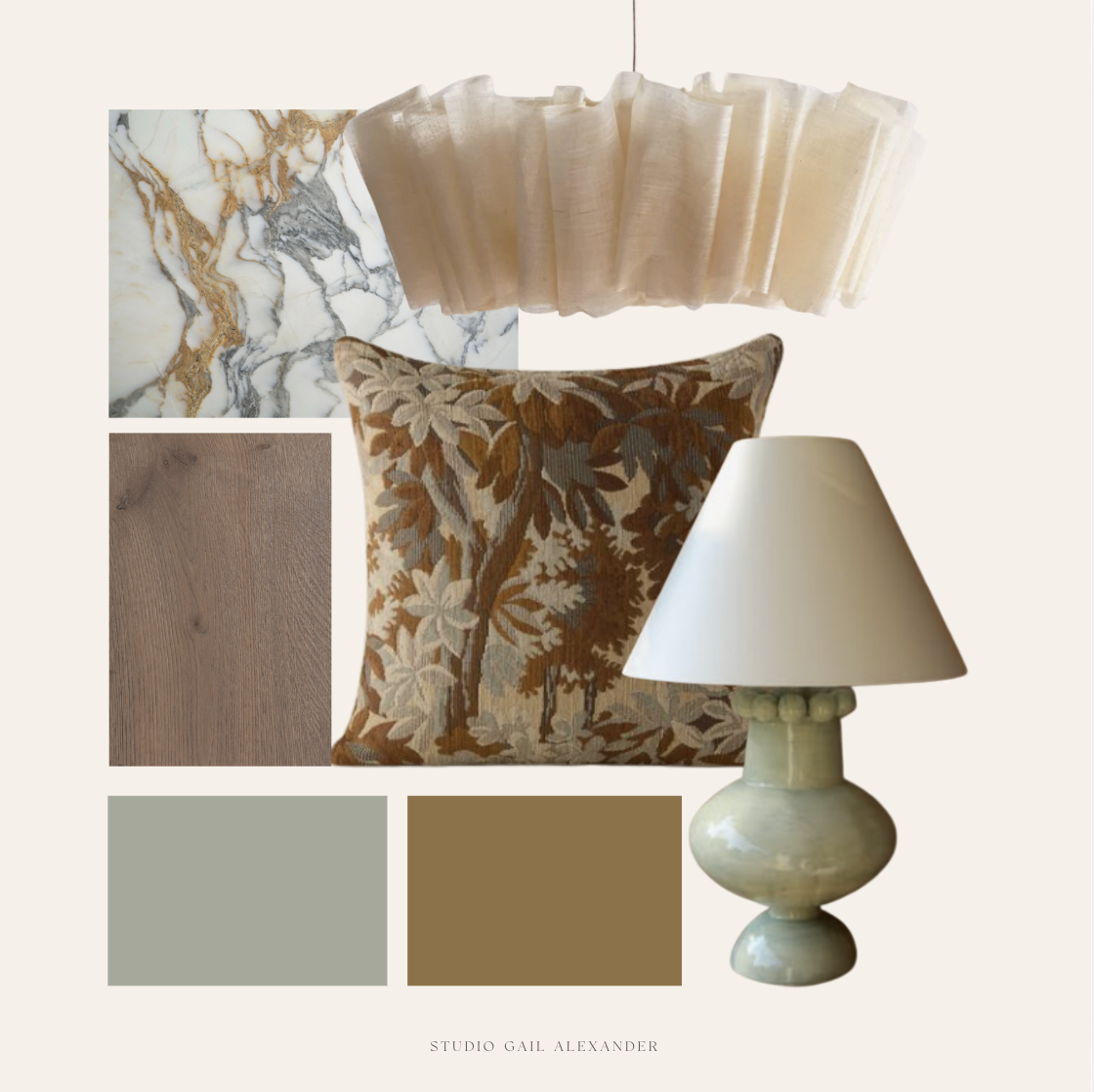
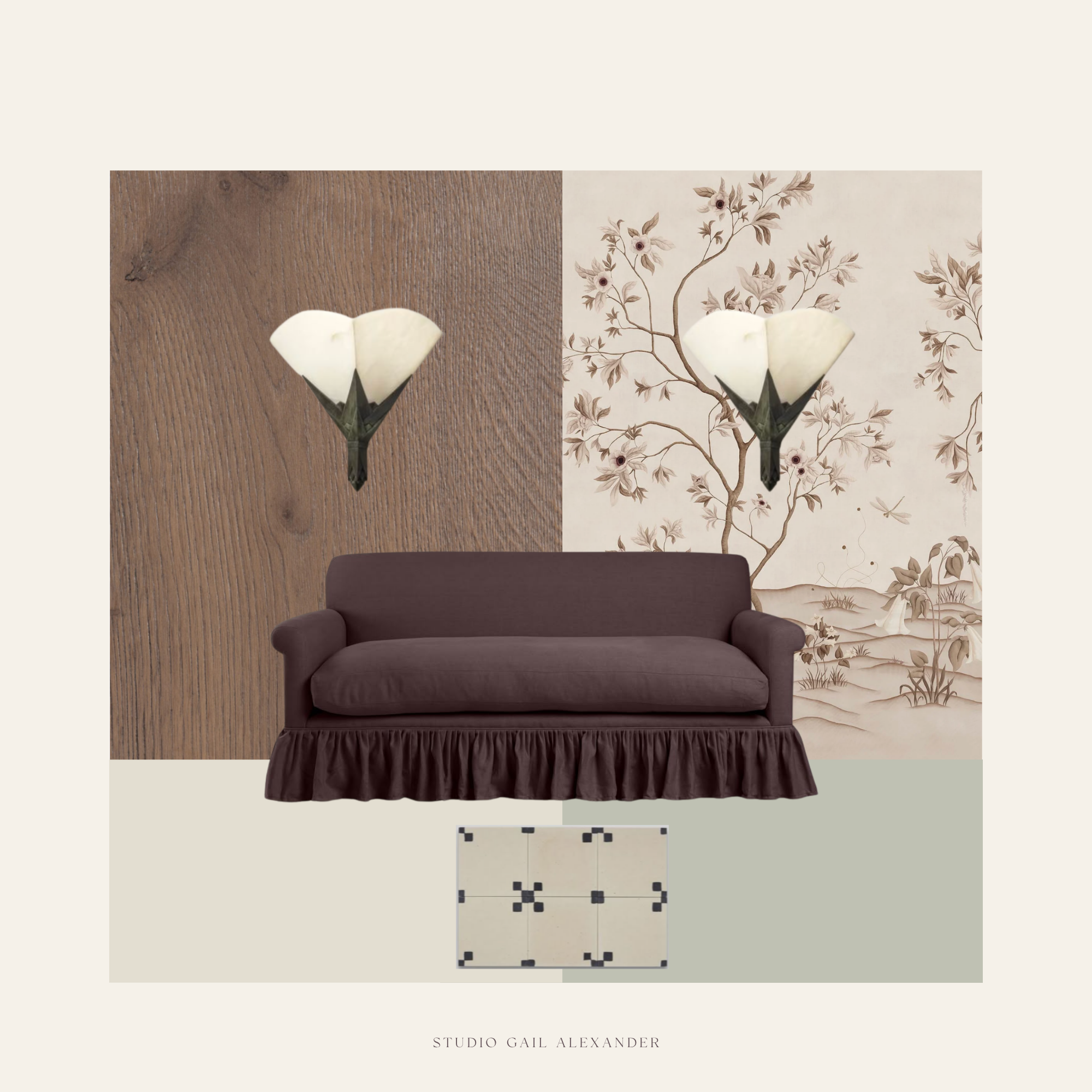
7 PIECES
The Rule of Seven:
How to Make a Whole Home Hang Together Without Matching a Single Thing
There are two fates that befall most homes, and neither is good.
The first is the show home problem: everything matches, everything coordinates, and the whole place has the personality of a hotel corridor. The second is the magpie problem: every room is a fresh start, every purchase a new love affair, and the house reads as if six different people live there and none of them speak.
The way out of both is deceptively simple. Choose seven pieces. Not seven objects, but seven recurring elements: the materials, colours and shapes that will appear, in some form, in every room of your home. Then vary how much of each you use as you move from space to space.
That’s it. That’s the whole trick. But like most simple things, the craft is in the choosing.
What the seven actually are
Think of them as your home’s vocabulary. A typical set looks something like this:
1. A wood. One tone, used consistently. Smoked oak, warm walnut, pale ash: pick your lane and stay in it.
2. A metal. Unlacquered brass, blackened steel, aged bronze. One finish that shows up in lighting, ironmongery and taps.
3. A stone or hard surface. A honed limestone, a green-veined marble, a Caithness flag if you’re feeling properly Scottish about it.
4. A lead colour. The one that carries the scheme. Deep moss, oxblood, a complicated off-white.
5. A supporting colour. The quieter companion that lets the lead breathe.
6. A texture. Wool bouclé, ribbed linen, waxed plaster. The thing you touch without thinking.
7. A shape or motif. An arch, a soft curve, a fluted edge. The visual rhyme that turns up in a mirror here, a headboard there.
Seven is not arbitrary. Fewer than five and the scheme becomes a uniform: you notice the repetition, and repetition you notice is repetition that bores. More than nine and the connections dissolve; the eye can no longer trace the thread. Seven gives you enough variety to keep every room interesting and enough discipline to keep the whole house on speaking terms with itself.
The proportion shift: why this never looks matchy
Here is where the scheme earns its keep. Coherence doesn’t come from using all seven elements equally everywhere. It comes from shifting the ratios.
In your sitting room, the deep moss might cover the walls, the brass might be a single floor lamp, and the fluted motif might live quietly in a side table. Walk into the bedroom and the hierarchy flips: the walls go to the complicated off-white, the moss retreats to a pair of cushions and the inside of a wardrobe, and the bouclé that was one armchair downstairs is now the headboard commanding the room.
Same vocabulary, different sentence. Your eye registers the kinship without ever being able to point to a matching pair. It’s the difference between a family who all wear the same jumper and a family who simply, unmistakably, look related.
A useful working ratio: in any given room, let one or two of your seven lead, let three or four support, and let the rest appear as little more than a rumour. The rumour matters. The sliver of brass on a bathroom cabinet is doing the same connective work as the statement pendant in the hall.
Choosing your seven (the honest version)
Don’t choose from a mood board of other people’s houses. Choose from evidence.
Open your wardrobe: the colours you actually wear are the colours you can live with, and they’ll flatter you in your own rooms the way they do in your own clothes. Look at what you’ve bought twice without noticing: if you own three brass lamps acquired years apart, brass has already chosen you. And look out the window. In Scotland, the light is soft, low and frequently grey, which is precisely why our schemes lean on materials with warmth and depth: timber with grain you can read, wool with loft, colours that hold their character on a dreich Tuesday in November rather than only performing in June.
Then write your seven down. Genuinely, on paper. A scheme that lives only in your head is a scheme you’ll abandon in the lighting aisle.
A spine, not a straitjacket
One caveat, because every good rule needs one. The seven pieces are a spine: they hold the body of the house upright and let everything else move freely around them. They are not a customs checkpoint at every doorway.
The inherited painting that matches nothing, the chair you carried home from a market in Copenhagen, the objects that hold your actual life: these belong in your home precisely because they don’t belong to the scheme. A house that follows its rules perfectly is a house nobody lives in. The seven exist so that the exceptions have something beautiful to stand out against.
Choose your vocabulary, shift your proportions, break your own rules occasionally and on purpose. That’s how a home stops being a collection of rooms and starts being one continuous, quietly confident thought.